Reaching Young Readers
A new initiative by MPA gives free digital editions of magazines to college students hoping to convert them into magazine readers and to test the viability and popularity of digital delivery. Five publishers are participating in this initiative. Read more

Ideas archive

World's First Mag
The Gentleman's Magazine was the first general-interest magazine. It was founded in London by Edward Cave in January, 1731. The original complete title was The Gentleman's Magazine: or, Trader's monthly intelligencer. More>>

More Facts

30 YEARS
Merrill Lynch report on the state of the newspaper industry does not see online representing over 50% of total newspaper ad revenues until more than 30 years from now.More>>

More Numbers
  • ASME's Top 40 Magazine Covers
  • 30 Most Notable Launches of 2005
  • Talking Magazine Videos
  • An Illustrated History of Magazine Covers and Cover Lines
  • Magazine First Issue Archive
  • Poynter
  • Folio Magazine
  • Magazine Publishers of America
  • American Society of Business Press Editors
  • Mr Magazine
  • Beyond the Page
  • Designing Magazines
  • NewsWatch India
  • Free Newspapers
  • The Editors Weblog
  • FishBowl NY
  • International Magazine News
  • Newspaper Index Blog
  • MagCulture
  • Magazine Daze
  • Magazine Enterprise 360
  • Online Press Gazette
  • Magazine Symposium 2007
  • Magazine Literacy
  • Magazine death blog
  • Premiere Issues Project


  • Global Voices Online - The world is talking. Are you listening?

    Magpie

    Why Magpie? Because I like observing these sleek birds with a tapering tail. And like Magpies, I live with the burden of being a 'chatter', even though I believe that I am rather shy, reserved and unobtrusive :).

    Thursday, July 31, 2008

    Free Stuff: Read all you can at Mygazine.com

    Mygazines.com is a new website that allows users to read, archive and upload content from the latest magazines for everyone to read and share within the online mygazine community. The magazines are available as digital editions where you can flip pages and use the zoom function.
    According to a press release issued by the company, mygazine.com was created for a myriad of reasons, including but not limited to:
    § Low Carbon Footprint: With 70% of newsstand magazines going unsold, the goal is to eliminate the waste.
    § No unnecessary content: Allows users to access only the information that is of interest to them.
    § Efficiency: Reduces the need to physically carry and archive content.
    § Universal: Allows foreign content to be available from anywhere to anyone (I like this one, I can actually read magazines I find difficult/impossible to find in Goa)
    § Monopoly: Eliminates the effects of conglomerates merging and controlling consumers’ choice and distribution, within almost every region worldwide.

    However, the industry does not seem too happy about this development, as is clear from this quote extracted from a news item on the ppa website:

    Magazine publishers need to be aware of Mygazines.com, which is infringing a number of UK based magazines' intellectual property rights.
    Dubbed 'Magster', Mygazines.com encourages users to upload scanned copies of magazines - without the permission of a large proportion, if not all of the
    magazine publishers - and then makes them freely available to view online.
    A number of PPA member titles have already been spotted on the site - and members are encouraged to check that their content has not been uploaded without authorisation. Should members find that their content appears on Mygazines.com - and they wish to have it removed - the most prudent course of action is to issue a cease and desist letter (also known as notice and takedown)”

    Labels: ,

    Thursday, March 27, 2008

    Advertising: Glow-in-the-dark Advertising

    Vice—the irreverent free glossy with 14 international editions based in New York—has figured out a new way to sneak an advertiser’s product onto its cover: glow-in-the-dark ink. The magazine’s Canadian edition is running an ad for BMW 1 Series—visible only in the dark—on the cover of its latest issue.

    Shawn Phelan, director of sales and marketing at Vice's Toronto office, told Strategy, a Canadian marketing magazine that "Maintaining the integrity of our cover—which is not usually for sale—while delivering a unique brand message for BMW was an amazing challenge”. That’s because a glow-in-the-dark ad is a production department nightmare. According to Phelan, the magazine had to print its covers at one plant; ship them to another to add the glow-in-the-dark ink, a UV coat; then back to the original plant for binding.

    Read more on Foliomag.com

    Labels: ,

    Thursday, January 24, 2008

    Article: Are more ads going to magazines?

    At a time when magazines the worldover are seeing a decline in ad pages, India is experiencing an unprecedented magazine boom. Every month sees at least one new launch and there seems to be no dearth of ad pages in any one of them.
    In this article from ‘The Brand Reporter’ industry professionals explain the growth in Magazine advertising in 2007.

    Extracts from the article:
    Maheshwer Peri, President & Publisher, Outlook:
    In this age of fragmentation and enormous wastages, magazines are the only media which would deliver filtered, specific audiences in the most cost-effective way. I see magazines only growing from here on as more specialised products make their entry felt.

    Jasmin Sohrabji, Managing Director, OMD India
    Increasingly their (newspapers) inclusion in the media mix will reflect their absolute cost of entry in a media plan vis-à-vis their effectiveness. Magazines show a higher ad growth, albeit on a lower base.

    Aman Nayar, Brand Manager, Navbharat Times
    A large number of launches have happened in the magazine category. That, and not any change in advertiser preferences, has resulted in this temporary spike.

    Sidharth Banerji, Managing Director, Kyndal India
    Magazines are preferred to newspapers because of many reasons. The primary reason is the pictorial outlook of the magazines compared to newspapers. Reproduction quality of magazines is far superior to that of newspaper.

    Read the entire article here.

    Labels: , ,

    Wednesday, December 05, 2007

    Trend: IPC offers a Subscription 'MIX'

    The Mix from IPC Media is a new subscription format that gives subscribers an opportunity to sample a mix of magazines over a 12-month period.

    In a first for the industry 'The Mix' launches in two markets: homes and fashion. 'The Mix: Homes' gives a three-month taster of Homes & Gardens, 25 Beautiful Homes, Ideal home and Livingetc; while 'The Mix: Fashion' gives three months each of Marie Claire, Look, In Style and Now.

    According to IPC Head of Subscriptions Marketing, The Mix has been created following research which revealed potential subscribers would appreciate the opportunity to 'pick and mix' titles.

    Labels: , ,

    Tuesday, October 30, 2007

    Trend: Pay-as-you-Please Annual Subscription

    Proving themselves to be in touch with the latest in the music industry, PASTE (an entertainment publication for progressive thinkers) has launched a “pay as you please” initiative for subscription.
    For a limited time, new subscribers and old readers (US only) can pay what they think right for an 11-issue, annual subscription, starting from $1 to beyond the standard price ($19.95) of a normal subscription.
    Anyone paying more than the standard price will be thanked in print, their names published in a future issue of PASTE.
    PASTE hopes to attract new readers and make them regular subscribers, the theory being that they will stay for the content after coming in for a cheap price. They also note that this unconventional offer will give them insight into just how much their regular readers think the magazine is worth.

    Labels: ,

    Saturday, October 06, 2007

    Trend: Asia Pacific media spend on magazines increases

    Asia Pacific magazines pulled 26 per cent more ad dollars in 2006
    Nielsen Asia Pacific Media & Marketing Trends 2007 reviews three years of media ad spend trends and consumption insights across 12 markets, and consumer and marketing insights and statistical information across 16 markets. The markets included are Singapore, Hong Kong, China, Malaysia, Australia, India, Indonesia, Philippines, Thailand, New Zealand, Taiwan and South Korea.
    In terms of Asia Pacific figures overall, main media ad spend, which includes terrestrial TV, newspapers and magazines, across the 12 Asia Pacific markets increased by 15 per cent from US$68.3 billion in 2005 to US$78.7 billion in 2006.
    "The last 15 years have seen dramatic changes across the Asia Pacific region, driven by significant economic and demographic development,” said Lisa Lee, SVP of international communications for The Nielsen Company said in a statement. “The effect has been equally dramatic on the shopping habits of the region's consumers. Our combined research resources bring together the first regional and market review of changing consumer lifestyles, attitudes and purchasing behaviour, together with insights into advertising, emerging radio audience markets and consumer trends across key markets in the region."

    Source: International Federation of the Periodical Press (FIPP)

    Labels: , ,

    Friday, September 21, 2007

    Trends: The Magazine as an Object

    However creative their content may be, most magazines still essentially amount to a pretty standard booklet of paper. Not so The Thing, which delivers an objet d'art instead. Its founders call it a magazine because incorporated into each object is some text. For example: The inaugural issue, shipped in August, was a plain brown window shade with one of two sentences silk-screened on it in black handwriting: "If this shade is down, I'm not who you think I am" or "If this shade is down, I'm begging your forgiveness on bended knee with tears streaming down my face."

    That project was conceived by performance artist, writer and filmmaker Miranda July, who won a special jury prize at the Sundance Film Festival for her film “Me and You and Everyone We Know” (2005). The next three issues of The Thing’s first subscription year will be by visual artists Anne Walsh, Kota Ezawa and Trisha Donnelly. Beyond that? There’s no telling yet which artists, writers, musicians or filmmakers editors Jonn Herschend and Will Rogan will invite.
    Subscriptions cost USD 120 plus USD 10 shipping for each issue domestically or USD 30 per issue to ship internationally. Budding artists are lining up at The Thing’s door, and anyone else looking to create buzz could learn from its expectations-altering example. By breaking with convention, you gain the power to surprise and delight!

    Original source link: Springwise
    Interview with the founders

    Labels: ,

    Tuesday, August 21, 2007

    Trends: Redesigns that Cut Corners

    Two recent unrelated new items about redesigns of Esquire UK (featuring among other changes also a change [also termed manbagging by guardian] of the size) and ‘compact-ising the ‘New York Times’ led me to do a Google on magazine formats.

    And I came across this interesting article by Art Kleiner that features the history of magazines from formats perspective. Must read. Though it talks more about how we place and have been placing pictures and text on the page.

    Article about Esquire UK redesign:
    Let's hear it for the little guy
    Article about new compact New York Times:
    Who shrunk my New York Times?

    Labels: ,

    Tuesday, March 27, 2007

    Trend: 'You' on the cover

    TIME magazine put a reflecting surface in its year-end issue and called 'You' the Person of the Year 2006, but WIRED's new experiment seems to go a step further.

    WIRED and Xerox have partnered to launch an integrated marketing program that offers subscribers the chance to receive an issue of the magazine with their own photos on the cover.

    The campaign was inspired by WIRED's July cover story on the future of personalization, according to Xerox. The program will be announced in the April issue of WIRED. It is currently being promoted on Wired.com, and subscribers are encouraged to go online and upload a 4×6 photo of themselves. The first 5,000 WIRED subscribers to participate will receive the July issue of the magazine with their image on the cover.

    After the first 5,000 subscribers create their personalized cover, consumers (not restricted to WIRED subscribers) will be able to go to the site, where a tool will be provided to create their own WIREDcover. Users will be able to submit a photograph, change the headline and change the color palette. These covers can be printed or emailed, but will not be on the July WIRED cover. So if you want to see yourself on the cover of WIRED and you are a subscriber click here
    Read more about the digital printing technology that will produce the personalized colour covers at the Xerox site

    Labels:

    Wednesday, January 17, 2007

    Trends: On-Product Publishing

    Australia-based Modern Media Concepts' publication iLove is a 32-page glossy women’s magazine contained within the label of a water bottle. The magazine is the outcome of founder Joanna Wojtalik's University project where she developed the concept of On Product Publishing.
    Launched in Australia in February 2006, iLove is available in more than 1200 petrol and convenience stores around Australia. This mini magazine (size: 10cm by 7.5 cm) is pitched at the 18-to 25-year old female readers and has a circulation of about 100,000 a week( The site I got this ‘back of the envelop’ number from calculated this by defining that the company has 2% of the australian bottled water market, making it about 100,000 bottles a week, hence that many issues).
    iLove readers love the magazine because they can read it anywhere--it fits into their purse, can be used as a shopping reference to take advantage of deals on-the-spot at leading boutiques and other retailers.
    The iLove team produces six editions a month. The founder is quoted as saying “The good thing about water is that it has a shelf life of about a year. Editions can stay out for a long time and readers can just pick a bottle by the cover.” Angelina Jolie and Danii Minogue sell out quickly. Bananarama, it would appear, were pretty much left on the shelf.

    As the business and the concept expands, MMC is hoping to licence the concept and collect royalties. They have already found partners in the US and are talking to publishing and beverage groups in Australia and Europe.
    You can read more about this new concept that integrates magazine publishing with fast moving consumer goods (FMCG) at onproductpublishing website
    iLove site also has a very nice step-by-step illustration that shows how the magazine works.

    Labels:

    Tuesday, January 09, 2007

    Trends: At the Newsstand on Friday

    For the first time in more than 50 years TIME magazine will be ‘on-sale’ on Friday. Writes managing editor Richard Stengel, the change was prompted by the shift in news environment and readers’ input that they though they get the magazine early in the week, they put it aside to read over the weekend. TIME also feels that getting the magazine on newsstands on Friday helps them 'set the news agenda, not just mirror it'.
    “The traditional newsmagazine was retrospective, looking back at what happened the previous week, says Stengel, but today's TIME is much more forward-looking, offering you guidance on what's essential to know going forward. Many news sources give you information; we provide knowledge and meaning.”
    Read Richard Stengel’s note to readers on Changing Time here
    ..............................................

    Just curious: Why do some Indian Monthly magaines show up on the newsstand almost in the middle of the month? I have often gone looking for a particular magazine at the newsstand and been told to come later... And at times I have bought a rival magazine, not really my first choice, but only because it was there.
    Any of you had similar experiences?

    Labels:

    Monday, October 23, 2006

    Trends: Magazines enter a Digital Second Life

    Forty magazine digital initiatives were announced in the third quarter of 2006, according to Magazine Publishers of America (MPA). Popular among the new initiatives were mobile networks, podcasts and video content for websites and mobile phones. While most initiatives show that magazines are going beyond the print page to reach their readers 24/7, the following digital intiatives stand out as unique:

    Virtual Headquarters: Wired magazine has set up a 1-acre digitized headquarters, complete with neon-pink sliding doors and a nouveau 50 person conference room in Second Life. The company expects to use its new virtual building to let writers chat with one another and to host three or four virtual Q&A events a month with real-world as well as Second Life notables.

    80 GB of Archives: The New Yorker offers a unique type of digital archive—80 years of magazine content on a limited edition hard drive with 20GB of extra space reserved for new articles from their website. The archive contains 4,164 issues of The New Yorker, dating back to 1925.

    Political Blog, Online Degree: Newsweek launched a political blog called The Gaggle. It has also tied up with Kaplan University to offer an online business degree program called Kaplan University/Newsweek M.B.A

    Bigger, better video: Forbes launched ForbesTraveler.com, a travel site aimed at the affluent, luxury traveler market and upgraded its video network at www.forbes.com/video to feature a larger player, program guide

    Suggested Reading:

    Big Media Gets a Second Life
    ">80 Years of a Magazine on Hard Drive
    ForbesTraveler.com for Well-to-Do Demo
    Magazine Digital Initiatives

    Labels:

    Wednesday, September 13, 2006

    Trends: The Economist Effect

    The Christian Science Monitor has an interesting article on what it calls the ‘Economist Effect’. Here are some excerpts:

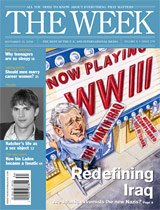
    1) Since 1988, Time's circulation has fallen by about 13 percent. US News & World Report has also dropped by about 13 percent. Newsweek, meanwhile, has lost about 6 percent of its paid readership. But during that same time period, other titles have thrived. Take The Economist. The British news weekly has seen its circulation jump by about 300 percent, despite the fact that it is less flashy, more serious, and costs more than twice as much as its US counterparts. And since its launch in 2001, The Week*, a new kind of Reader's-Digest-type summary of news accounts from other organizations, has attracted 439,000 readers.

    2) Time's new publishing schedule will mean it hits the streets on the same day as its British competitor. And Time's idea about circulation, placing less emphasis on quantity, suggests an approach that several publications, including The Economist, have pursued: It's not how many subscribers you have; it's who they are.

    3) Among newspapers, the rise of the elite media (media that target better educated, more-affluent audiences with more money to spend) can be seen in the growing and increasingly nationalized circulations of The New York Times and The Wall Street Journal. On radio, it can be calculated in the increase of National Public Radio's audience. In magazines, the prime example is The Economist.

    4) As wealthier, more news-focused audiences leave mainstream outlets, those outlets will be forced to reach out to different groups to fill the holes in their audience - groups that probably have lighter definitions of news. In other words, a small group of coverage-rich news media will get richer while the rest get poorer in their content.

    For complete article, read: The Economist effect: Not all news media are dumbing it down

    * Not The Week, brought out by Malayalam Manorama Group

    Labels:

    Wednesday, August 16, 2006

    Trends: Catazines and Magalogs

    Justice, a specialty retailer of apparel for girls ages 7 to 14 launched a "catazine," a cross between a catalog and a magazine, this month. Justice's catazine caters exclusively to increasingly fashion-conscious tweens and will help tweens put together the perfect back-to-school outfit. The new, 52-page catalog, called Justice, was mailed to about 1 million girls ages 7-14, according to DM News.

    Increasing, we see magazines becoming catalogs and catalogs becoming magazines. Lucky Magazine, the magazine about shopping, is generally credited with starting the trend. This new breed of magazine doesn't rely on celebrities or 'how-to' sex stories. In fact, new-style magalogs make some things work that catalogs can't. While catalogers, less than successfully tried to insert pages of sticky tabs for customers to attach to a page of an item they wanted to buy, Lucky can offer this and gain, as it sells these as part of a paid ad.

    What makes Catazines different from Magalogs?
    Not entirely sure, but it seems that in Magalogs, unlike in regular magazines, virtually every editorial block highlights charms of a particular item, provides the url or phone number to purchase it.
    Catazine is a catalog-turned-magazine. Catalogs are usually brought out by one big retailer or a brand name unlike magalogs which feature multiple brands....

    Still confused? Read the article "Serious Competition or Opportunity" By Katie Muldoon, president of DM/catalog consulting firm Muldoon & Baer.

    Labels:

    Friday, July 14, 2006

    Trends: 48% Cotton, 52% News

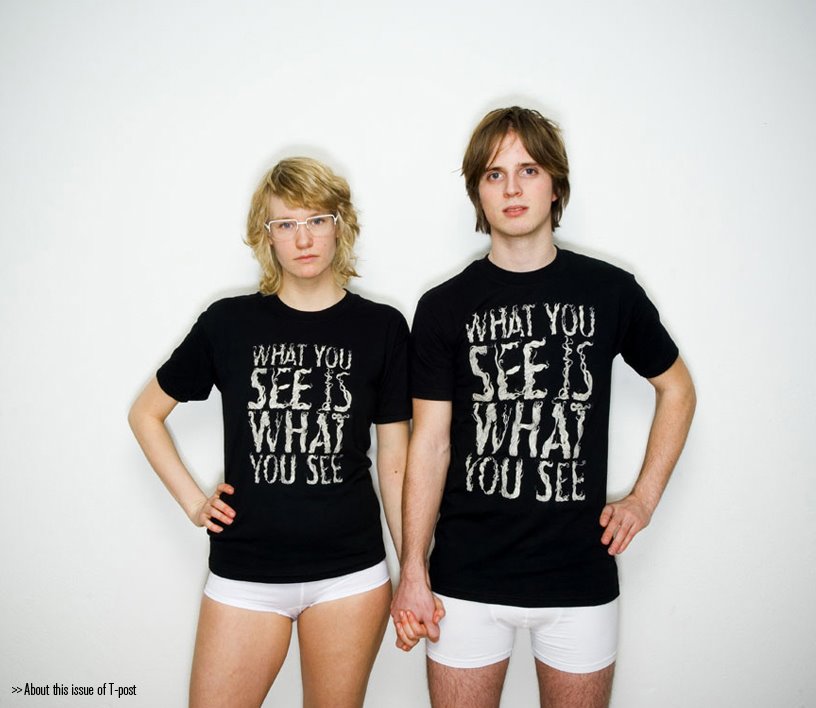
    Worried that your newspapers and magazines are not giving you all the news you ought to get? Perhaps it is time to subscribe to T-post.

    T-Post is a lot like having subscription to a magazine, only instead of receiving magazines in your mailbox, you receive Tshirts! Every six weeks staffers at Tpost take a news story that catches their attention and design a Tshirt based on the news. Each T-shirt is a new issue and is numbered like magazines.

    Themes vary from hard-hitting stories like Nepal striving for democracy (a sun peeking over the shoulder of a snow-covered mountain imprinted with the saying 'This is merely the beginning of the beginning', in Nepali) to more entertaining reports including a recently discovered breed of pigs that glow in the dark (a bright green tee adorned with a giant pig’s tail).

    Every delivery accompanies a small write up that describes the news behind your Tshirt. According their website "You may not always read about Tshirt story in your newspaper, but in our opinion you should have".

    The downside: Each Tshirt costs 26 euros and even if you don't like what you get, you cannot return it back.
    If you do like stories in a magazine you subscibe to, you cannot return it, can you?

    Labels:

    Monday, July 03, 2006

    Trends: Travel features in PC MAGAZINE?

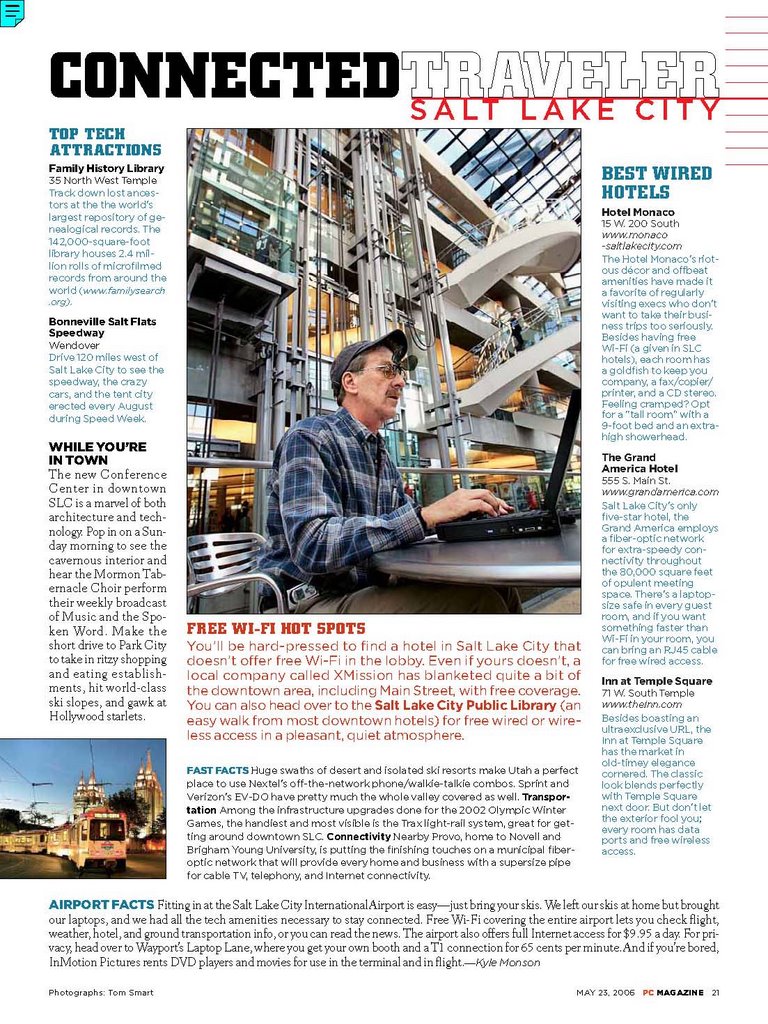
    Since January 2006, PC Magazine has been broadening its coverage to include travel features ...
    And why not? Car/bike magazines, photography magazines have been doing so for years....

    This month PCMAG 'Connected Traveler' travels to Dallas to check out top tech attractions, including Fair Park, home to nine museums and six performance facilities, such as The Science Place, which has an IMAX theater.
    Previous issues have visited Salt Lake City "You'll be hard-pressed to find a hotel in Salt Lake City that doesn't offer free Wi-Fi in the lobby", Houston "Check out the museum that's all about people 'checking out'.", New York City, Detroit, Boston, etc...

    Yet to see similar travel features in Indian computer magazines...

    Labels:

    Monday, June 05, 2006

    Trends: Exclusive premiums drive magazine sales

    According to Circulation Management’s April 2006 issue Future US, a leading publisher of cutting-edge games, action sports, computing musician, and men’s and women’s lifestyle magazines, saw a 12.5% gain in retail sales over the last year.

    Future belives that inclusion of exclusive premiums (namely DVDs and CD-ROMs) with the newsstand copies ensured that consumers spend significantly more money on Future titles than any other magazines on the newsstand.

    Hoping to drive sales using premiums, the "summer preview" issue of TV Guide has announced a FREE DVD that gives sneak peeks, cast interviews, and "behind-the-scenes" content from both new and established series, including TV Guide's picks for the best comedies, family shows, and reality TV.

    The DVD will be packaged in 700,000 issues to be sold in top markets including New York, Los Angeles, Philadelphia, Phoenix, San Francisco, Portland, and Boston. Shows to be previewed include HBO's "Entourage," Showtime's "Brotherhood," and TNT's "The Closer."

    Labels:

    Tuesday, May 23, 2006

    Trends: Digital Issue leads Print Edition

    Nylon, a trendsetting magazine that covers music and fashion, plans to release a free digital edition of its music issue on MySpace from May 24. The digital issue will be available for a free download at the magazine's website and what is notable is that the print issue won't be available until May 31. So here's a case where a digital issue leads a print edition :).

    Be sure to download your personal edition of their June-July music issue.

    Labels:

    Saturday, May 13, 2006

    Trends: Posterzines

    Fox and Marvel are partnering with Future publishers to produce X-Men "posterzines" to promote the upcoming X-Men movie.

    Premier edition of the new 'posterzine' line consists of nine glossy poster-sized photos of the X-Men characters [Wolverine (Hugh Jackman), Storm (Halle Berry), Cyclops (James Marsden), Professor X (Patrick Stewart) and many more])folded to magazine size, as well as actor bios and an interview with the director .

    Selling for $5.99, 200,000 copies are due at newsstands on May 25th--the day before the movie is slated to open.

    Labels:

    Tuesday, April 25, 2006

    Trends: More launches expected this year?


    The Outlook group has announced a couple new magazines (on lifestyle) and business. Reed Business Information(RBI) has a announced a tie-up with Infomedia India and Reed Elsevier has a tie up with a Delhi-based publisher. Maxim (inaugural cover shown here) has made a loud entry into the Indian magazine market.
    However, The Indian Express Group that last year announced plans to launch special interest magazines has been unusually silent despite having hired some of the best heads from Outlook Group.

    Excerpts from a story posted on agencyfaqs

    The Indian Express group, which had earlier announced the launch of a few new magazines in the first quarter of 2006, has deferred its plan as of now.
    However, in a telephonic conversation with agencyfaqs!, Shekhar Gupta, editor-in-chief and group CEO, Indian Express group asserts that the plan to launch the magazines has not been completely shelved. “The plans are still on, and hopefully we will be ready to announce something pretty soon,” he says.
    But the industry is quite abuzz with the rumour that the plans for the magazine have already been abandoned. It may be recalled that the group had hired senior professionals for its new venture. Outllook’s Sandipan Deb was hired to head this division.
    Gupta insists that the main reason for this delay in the launch has been logistical problems, but he declines to divulge details.

    Labels: